 AROUND THE EDGES TILE
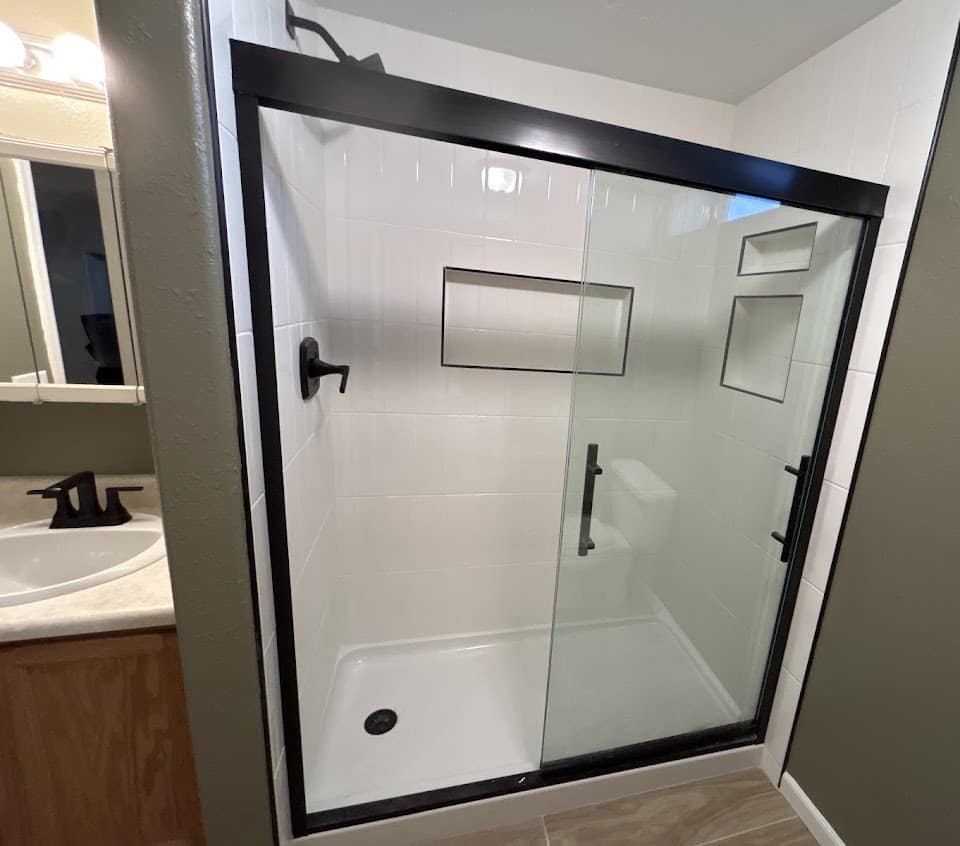
Photo: Around The Edges Tile project portfolio.
Tile and grout are not the waterproofing layer
A shower may look watertight, but grout joints and many tile materials are not designed to be the sole moisture barrier. A properly designed waterproofing system protects the structure behind and beneath the tile.
What a complete shower assembly considers
The installer should account for the shower pan, wall waterproofing, corners, penetrations, drain connection, transitions and appropriate slope to drain. Products need to be compatible and installed according to their instructions.
Common weak points
Niches, benches, curbs, plumbing penetrations and the junction between wall and floor are details that deserve careful attention. A beautiful tile layout cannot compensate for missing waterproofing at these locations.
Curbless and linear-drain showers
These layouts can be attractive and accessible, but require thoughtful floor elevations, slope, drain selection and waterproofing continuity. Feasibility depends on the existing structure and local requirements.
What homeowners should ask their installer
Ask which waterproofing system will be used, how the pan and drain will be integrated, what preparation is included, whether any testing is planned, and what the written scope covers. Request manufacturer documentation when appropriate.
Signs that merit investigation
Persistent dampness, loose tile, recurring staining, soft surrounding materials or water appearing outside the shower can indicate a problem. The cause should be assessed rather than concealed with new grout or caulk alone.
Plan the project from the substrate outward
A durable tile shower begins with a sound structure, correct slope and a coherent waterproofing approach. The finish tile comes after these details are resolved.
Need a project-specific recommendation? Material selection and installation details depend on site conditions, product specifications and applicable requirements. Ask Around The Edges Tile for an estimate.